 Chichen Itza Entry Tickets
How to Get to Chichen Itza: Every Route, Bus Line and Drive Time
How to get to Chichén Itzá starts with where it sits: beside the village of Pisté on Federal Highway 180 (km 120), in Yucatán state - inland from everything, which is why getting there is the biggest decision of the day. From the Riviera Maya count 2-3 hours; from Valladolid, under an hour. This page runs every route by bus, colectivo, rental car and tour, with the costs and the one rule that matters more than the vehicle: leave early enough to enter at 8:00.
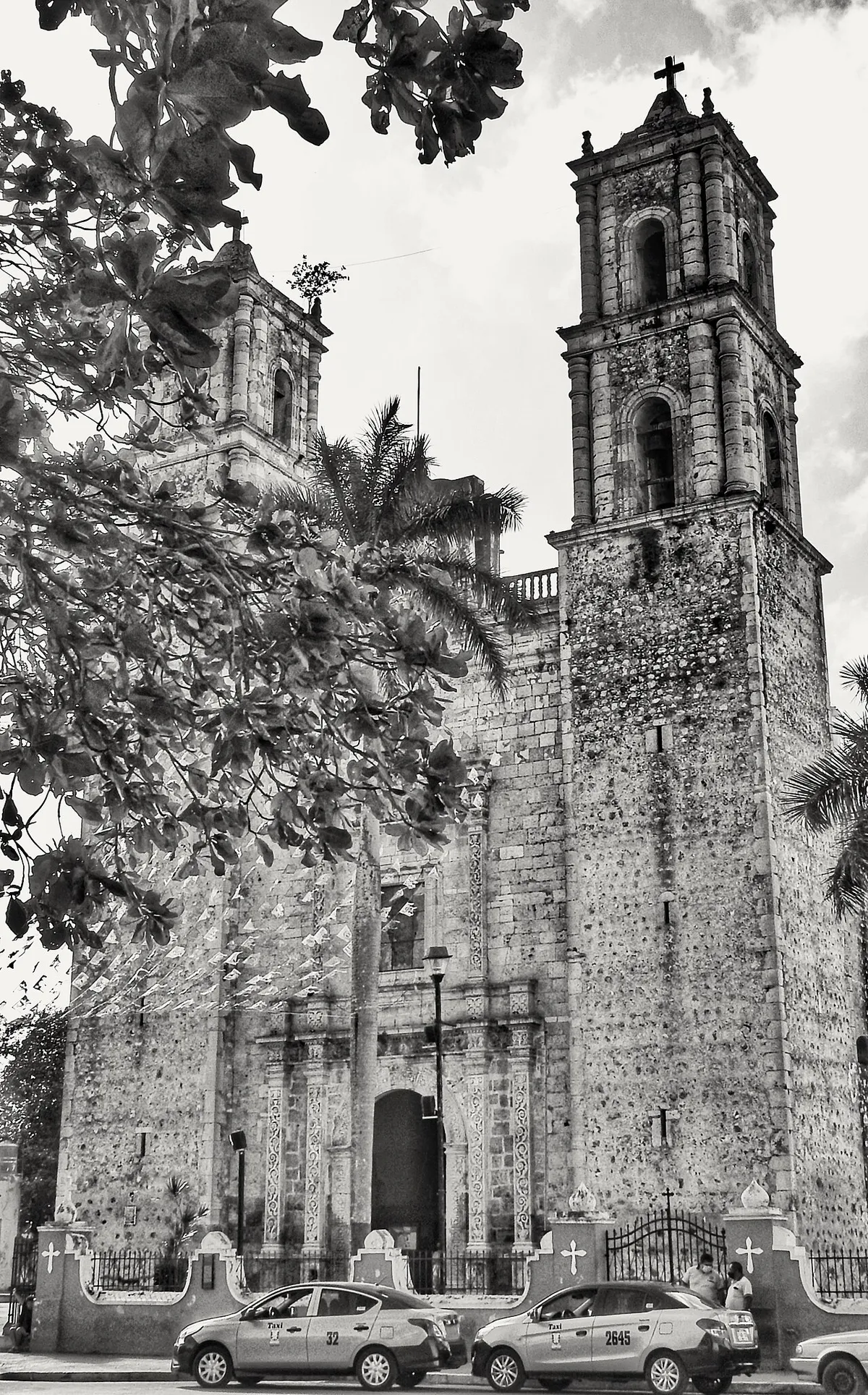
Valladolid's plaza and cathedral - the closest city to Chichén Itzá and the best base for an 8:00 entry. Photo: Wikimedia Commons (CC BY 2.0).
Quick answer The route that fits your base, and the early-start rule every route shares
Fly into Cancún (CUN) for the Riviera Maya side or Mérida (MID) for the Yucatecan side. Then: from Cancún it is about 2.5 hours (ADO bus $220-480 MXN, rental car, or a $57-120 tour); Playa del Carmen 2.5-3 h; Tulum 1.5-2 h; Valladolid 45 min-1 h (colectivos, $35-120 MXN); Mérida 1.5-2 h. Whatever the route, the goal is the same - enter at 8:00 - and the entry itself is a separate purchase: the all-taxes tickets run $79 online, $697 MXN at the gate.
Key takeaways
- Closest base: Valladolid - 45 minutes, colectivos all day, see the plan.
- From Cancún: ADO bus from the ADO terminal, or the 180D toll road by car - about 2.5 hours.
- Pair the day: a cenote swim and Valladolid's plaza on the way back - the combos.
Which Airport for Chichen Itza
Cancún (CUN) is the practical choice for almost everyone: the biggest international schedule, and 2.5 hours from the site down the 180D. Mérida (MID), 1.5-2 hours the other direction, suits travellers basing in Yucatán's capital - a smaller airport, often cheaper flights, and a city worth two days on its own. Cozumel (CZM) works only if you are already island-based; the ferry-and-drive chain makes it the slowest sensible route. There is no airport at Pisté.
| Airport | Drive to Chichén Itzá | Best for |
|---|---|---|
| Cancún (CUN) | 2.5 hours | Riviera Maya bases, most flights |
| Mérida (MID) | 1.5-2 hours | Mérida-based trips, colonial Yucatán |
| Cozumel (CZM) | 3+ hours with ferry | Only if already on the island |
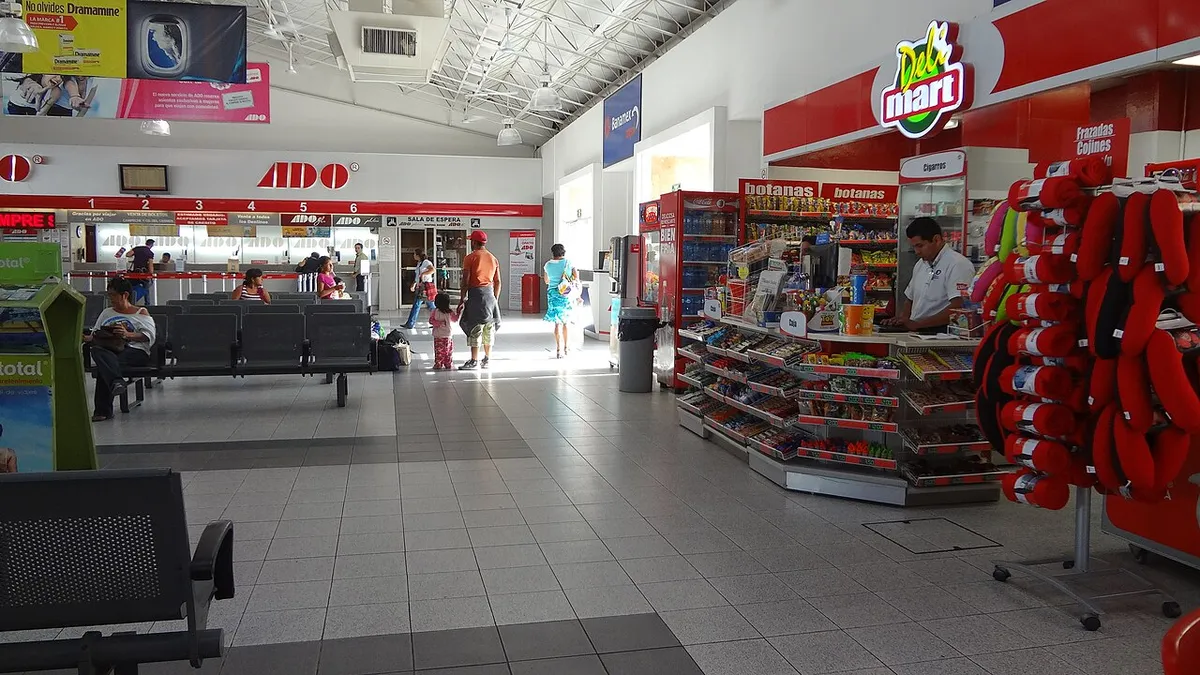
The ADO terminal in Mérida - the first-class buses to Pisté leave from stations like this across the peninsula. Photo: Wikimedia Commons (CC BY 2.0).
Route by Route
Times below are for a normal traffic day; the toll road (cuota, the 180D) versus the free road (libre) difference is mostly about potholes and topes, not speed.
| From | Time | By bus/colectivo | By car | One-way cost pp |
|---|---|---|---|---|
| Cancún | 2.5 hours | ADO from the ADO terminal to Pisté | 180D toll road, parking $120 MXN | MXN $220-480 |
| Playa del Carmen | 2.5-3 hours | ADO to Pisté, morning departures | 180D southbound | MXN $180-420 |
| Tulum | 1.5-2 hours | ADO/second-class bus, or colectivo chain via Valladolid | 109 north to the 180 | MXN $100-280 |
| Valladolid | 45 min-1 h | Colectivos from Calzada de los Frailes area, all day | Flat 15-minute highway hop | MXN $35-120 |
| Mérida | 1.5-2 hours | ADO direct to Pisté, frequent | 180 eastbound | MXN $120-230 |
The bus reality check
The ADO is comfortable, air-conditioned and drops you at Pisté village, a 15-20 minute flat walk or a short colectivo hop from the ticket gates. The catch is schedule: the useful morning departures arrive mid-morning - exactly when the site is at its busiest - and the last convenient returns leave late afternoon. Renting for a day, or sharing a tour's van, buys back the 8:00 arrival that the bus cannot.
If the bus is your only option, buy the seat the night before at the terminal or on the ADO site, sit on the left heading inland for the shade, and treat the ride as the day's built-in siesta on the way home.
The Early-Start Rule
Every route converges on the same fact: the visit is decided by your arrival hour. The hour-by-hour breakdown is blunt - the 8:00-10:00 window is cool, empty and softly lit, while the 10:30-13:00 tour-bus wave turns the central plaza into a crowd. Working backwards: leave Valladolid by 7:00, Tulum by 6:30, Playa del Carmen or Cancún by 6:00.
It is an ugly alarm clock and the single best decision available for this site - and it is exactly the window a skip-the-line ticket is built to protect once you arrive.
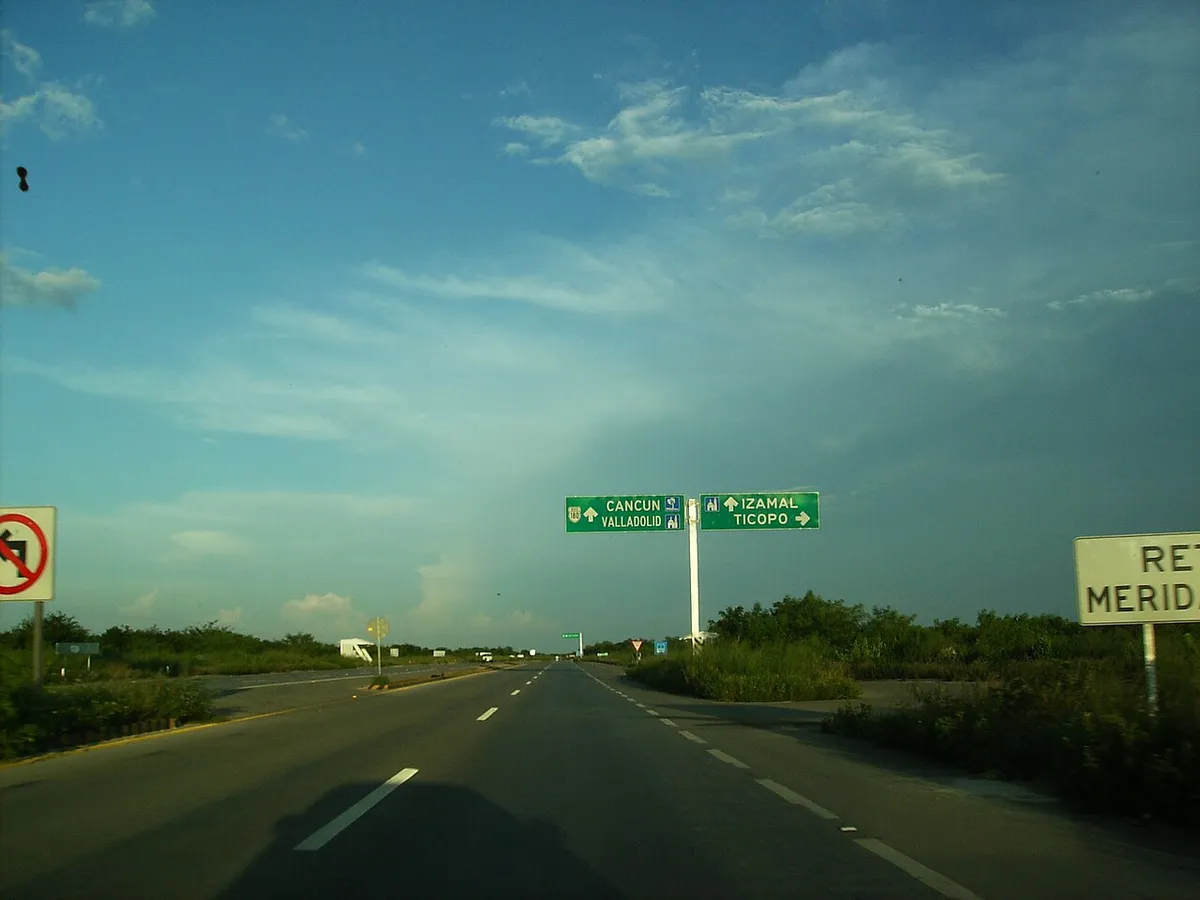
The 180 toward Cancún - the highway spine every Riviera Maya route rides. Photo: Wikimedia Commons (public domain).
Tour Van, Bus, or Rental Car?
A $57-120 day tour solves transport, entry and guiding in one booking and asks nothing of you before 7:00 except being at the lobby. The DIY chain - rental car or ADO plus a $79 all-taxes ticket - costs about the same for two or more people, buys the 8:00 arrival and leaves the afternoon free for a cenote. Solo and schedule-light travellers: the tour is genuinely the better product.
Couples and families with a driver: DIY, and spend the difference on a longer car or a second cenote. The full arithmetic lives on the without-a-tour page.
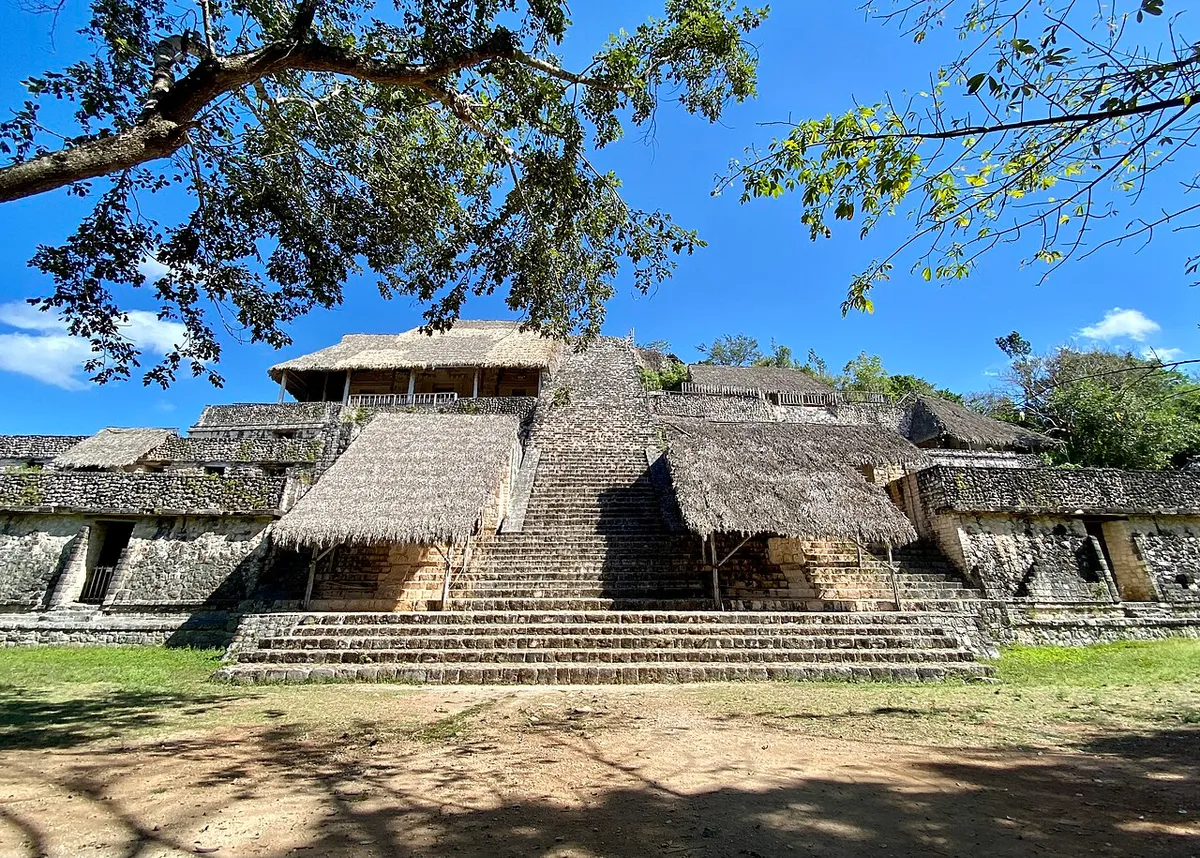
Ek Balam's Acropolis, 45 minutes north - the classic add-on when the day still has legs. Photo: Wikimedia Commons (CC BY 2.0).
Pairing the Drive: Cenotes, Valladolid and Ek Balam
The drive is long; the region around Pisté repays it. Cenote Ik Kil, ten minutes from the gates, is the tour-circuit classic - a wide open sinkhole with vines and a swimming line. Cenote Zaci sits inside Valladolid itself, a five-minute walk from the plaza. Valladolid deserves two hours for the Convento de San Bernardino, the plaza and a proper Yucatecan lunch (lomitos de Valladolid). Ek Balam, 45 minutes north, is the quiet, climbable pyramid site that pairs perfectly with a Chichén Itzá morning if you are driving. Out and back with one of these, a Riviera Maya day becomes a full and reasonable itinerary rather than a marathon.
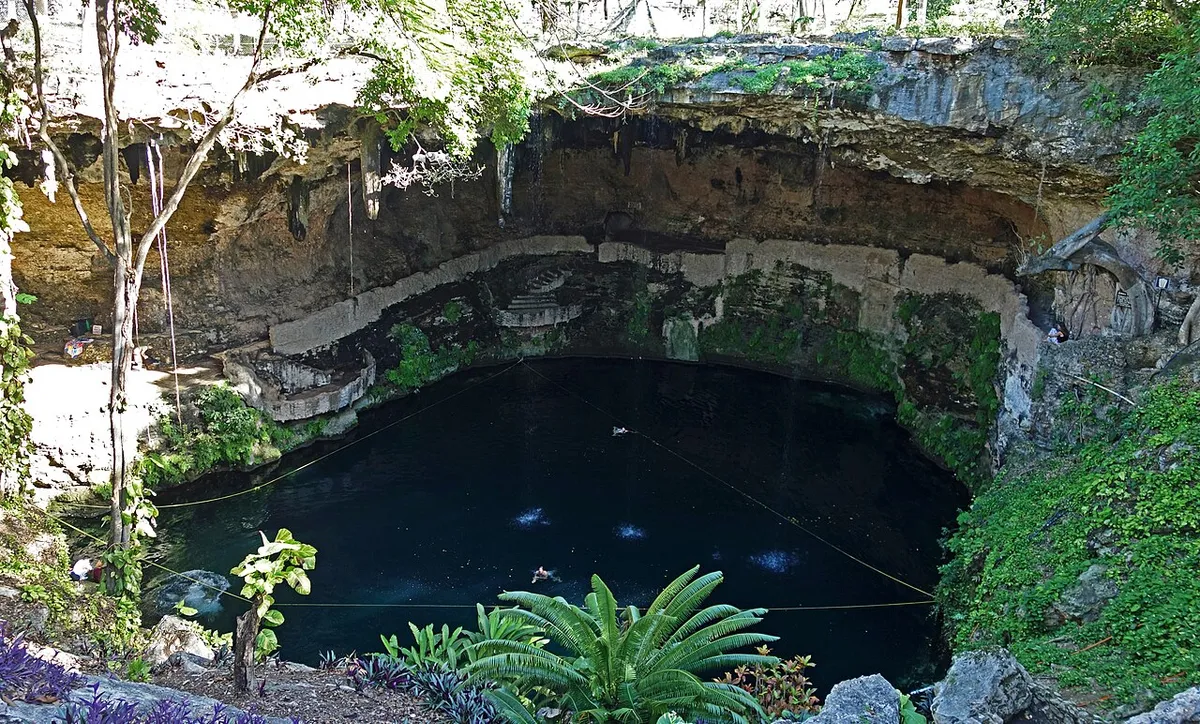
Cenote Zaci, inside Valladolid - the swim that needs no detour on the drive home. Photo: Wikimedia Commons (CC BY 4.0).
Toll Road or Free Road: the Real Difference
Two Highway 180s run between the coast and Pisté. The cuota (180D) is the fast, empty, dull one - divided lanes, toll plazas totalling roughly MXN $250-350 each way from Cancún, and nothing to see. The libre (180) is free and passes through the towns - Valladolid's eastern edge, Chemax's topes, the roadside cerámica stands - at the cost of speed bumps whose frequency rewards a light right foot.
Drive times differ by 10-20 minutes, not hours; the real choice is toll receipts versus towns. Most renters take the cuota out at dawn and the libre back through Valladolid for lunch, which uses each road for what it is actually good at.
Gas, topes and the return drive
Fuel is cheap by US standards and Pemex stations cluster at Pisté, Chemax and Valladolid - enter the day with a full tank regardless. The topes (speed bumps) are sometimes signed, often not, and the libre's villages are where they breed. And the return drive after a 5:45 wake-up is the day's most dangerous half-hour: if the swimming stop runs long, split the drive or let the passenger talk. offline maps earn their keep on this route too - the cuota's service plazas are sparse, and the one time your GPS wants to reroute through a jungle shortcut is the time you decline politely and drive to Valladolid like the bus does.
Renting a Car in Yucatán: the Practicalities
A rental day makes the 8:00 entry trivial and the cenote stops easy, and it costs $40-70 US a day plus the two line items that surprise first-timers: third-party liability insurance is legally mandatory in Mexico and adds $15-25 US a day (the counter will sell it aggressively if your booking did not include it - check before you arrive whether your plan covers Mexico), and most agencies hold a deposit of several hundred dollars on the card. Add the parking at the site ($120 MXN), tolls if you take the cuota both ways, and the arithmetic that decides bus-versus-car per party: a couple lands near tour prices, a family of four undercuts them comfortably.
Do you need a car for Chichén Itzá specifically?
Only if the early hour and the detours matter to you - and at this site they matter more than almost anywhere else in Yucatán. A car buys the 8:00 entry, Ik Kil on the way home, Valladolid for lunch and Ek Balam if the day has legs. If none of that tempts, the ADO bus is cheaper and the tours are easier; the honest advantage is the morning.
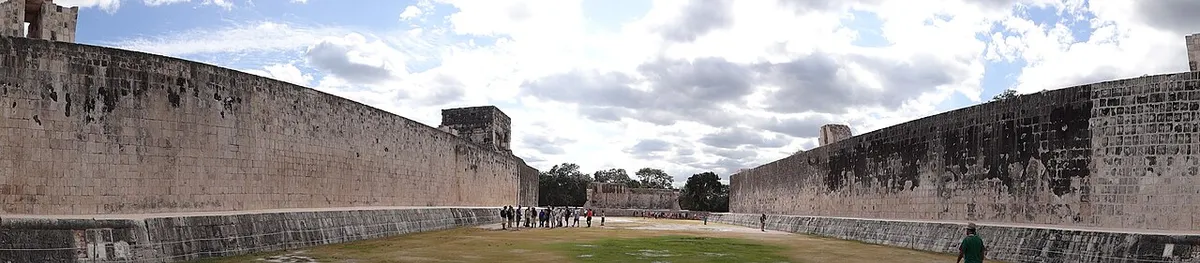
What the drive pays for: the Great Ball Court panorama in the first quiet hour. Photo: Wikimedia Commons (CC BY-SA 3.0).
Taking the Tour Van: What It Actually Buys
A $57-120 day tour from the Riviera Maya is the logistics-free option: hotel pickup around 6:00-8:00, the drive handled, entry bundled (read the inclusions - most bundle it, some list it as extra), a certified guide at the ruins, and usually a cenote swim on the return. What it does not buy is the early plaza - vans converge on the site mid-morning by design - or more than ~90 minutes at the ruins, or the freedom to linger. The ticket-only alternative plus a rental car costs a couple about the same and keeps the timetable.
Neither is wrong; they are different products for different travellers, and the DIY arithmetic makes the comparison line by line.
If you take the tour anyway
Two checks before booking: does the price include the Chichén Itzá entry, and how long is the ruins stop - the honest listings say 1.5-2 hours, and that number matters more than $10 of price difference. Private versions of the same tour fix both and multiply the cost; for families of four or more they are worth pricing.
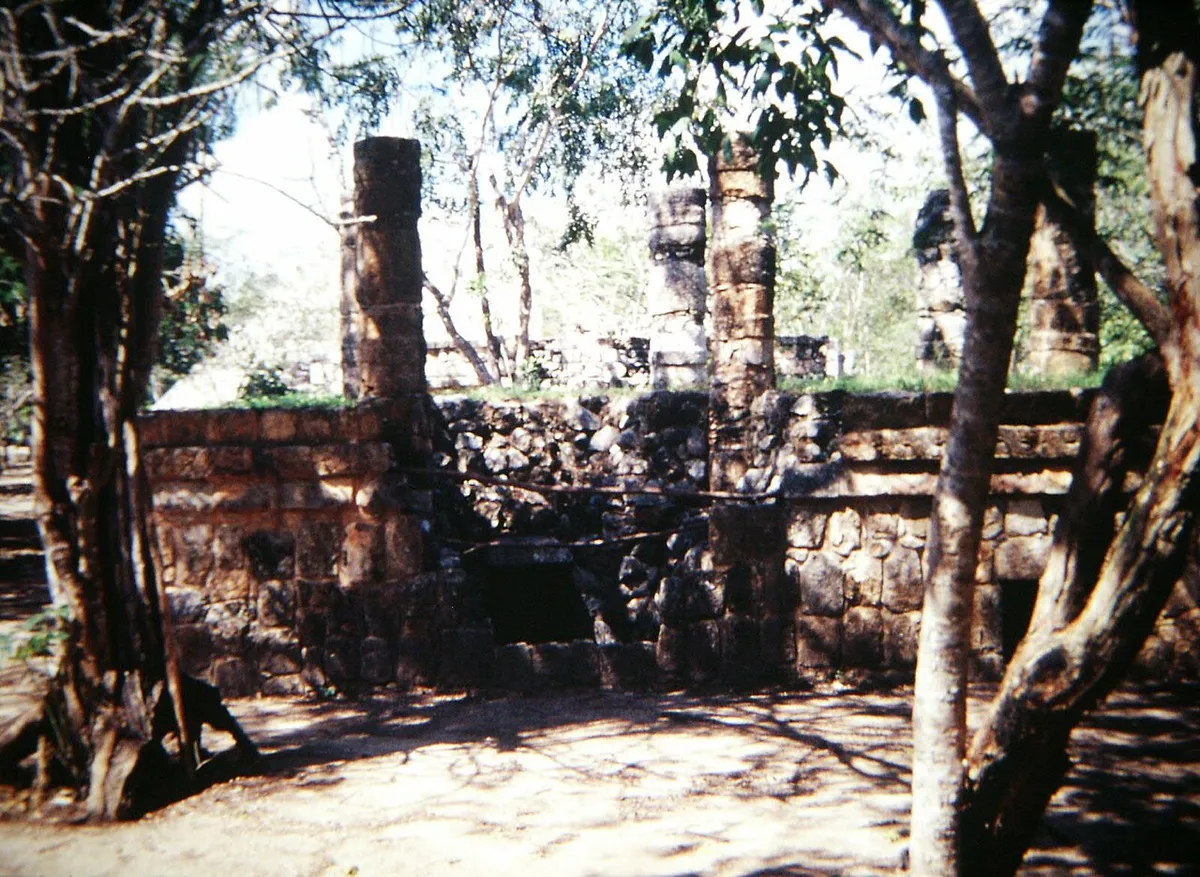
Jungle across the highway - the drive through Yucatán's flat green interior is half the trip's character. Photo: Wikimedia Commons (CC0).
The Last 500 Metres: Parking, Walking and Arrival
However you arrive, the final approach is the same: drop-offs and parking sit a flat 5-15 minute walk from the ticket gates, along a corridor of crafts vendors that doubles as the site's unofficial reception. Drivers: the official lot charges about $120 MXN for the day and fills from mid-morning in season - another quiet argument for the early start. Bus arrivals: Pisté's stop is 15-20 minutes on foot, shaded in parts, flat throughout.
The walk is where the first umbrellas and water bottles appear; if you have neither, this is the last cheap place to buy them before the site's own vendors price the same comfort higher.
One decision to make before the walk
Water in, food out: the gate allows sealed bottles and confiscates snacks, so finish the gas-station pastries before the queue or carry them as the post-visit car snack. The site rules are short and enforced - knowing them is worth more than any vendor's shortcut.
Winter-Over Flights, Private Transfers and the Edge Cases
Three less-common arrivals worth a paragraph each. Private transfers ($120-200 US per vehicle each way from Cancún) sit between a tour and a rental: door-to-door on your schedule, priced for groups of 3-6, bookable with flight numbers - the sweet spot for families who want the 8:00 entry without driving. Mérida-based trips should flip the whole page: the site is 1.5-2 hours east on the 180, traffic runs the other way, and Valladolid becomes the return-stop rather than the base. Overland from Mexico City is a flight in practice - the ADO night buses exist and take most of a day; nobody should drive it for the ruins alone. In every edge case the constants hold: the entry ticket is bought separately, and the morning hour is the thing worth protecting.
Getting-There Questions
What airport do you fly into to go to Chichen Itza?
Cancún (CUN) for the Riviera Maya side - about 2.5 hours by road - or Mérida (MID), 1.5-2 hours, if you are basing in Yucatán's capital. Cozumel works only for travellers already on the island. The airport table compares the three.
Is it worth going to Chichen Itza from Cancun?
Yes, with one condition: go early. The 2.5-hour drive each way is the day's real cost, and entering at 8:00 - not 11:00 - is what separates the good version of the visit from the exhausting one. A skip-the-line ticket and a 6:00 departure is the standard good day.
Can you go to Chichen Itza without a tour?
Yes - ADO buses, colectivos and rental cars all reach Pisté without a tour package, and a $79 entry ticket is bought separately. The route table shows each option's time and cost; the honest trade is the bus's mid-morning arrival against the tour van's timetable.
What is the best way to see Chichen Itza?
Early, independently, and unhurried: arrive for 8:00 by car or the first bus, walk the core loop in 2-3 hours (the route), and leave before the afternoon heat - or hire a gate guide for MXN $800-1,800 if you want the history narrated.
How far is Chichen Itza from Valladolid?
About 45 minutes to an hour - it is the closest real city and the best base for an early entry. Colectivos run the route all day for MXN $35-120, and the town's plaza and cenote make the evening after a morning at the ruins genuinely pleasant.
Should I take the toll road or the free road to Chichen Itza?
Out at dawn, take the cuota (180D): empty, fast, MXN $250-350 in tolls from Cancún. Back, take the libre through Valladolid for lunch - the time difference is 10-20 minutes, and each road is best at a different half of the day.
Is it difficult to rent a car and drive to Chichen Itza?
The driving is easy - flat highways, one obvious turn - the paperwork is the trap: mandatory Mexican liability insurance ($15-25 US a day if not pre-included) and a deposit hold. With those booked ahead, a rental day is the most reliable way to reach the 8:00 entry.
How long is the bus ride from Cancun to Chichen Itza?
About 2.5 hours on the ADO to Pisté, then a 15-20 minute flat walk or short colectivo to the gates. The schedule's catch is arrival hour - the useful buses land mid-morning, so the early-start rule is the one thing the bus cannot buy.
Is a private transfer to Chichen Itza worth it?
For 3-6 travellers who want door-to-door timing without driving, yes - $120-200 US per vehicle each way buys the 8:00 entry that buses cannot deliver and skips the rental paperwork. The edge-case routes place it against the alternatives.
Where does the bus drop me for Chichen Itza?
In Pisté village, 15-20 minutes' flat walk from the ticket gates (or a few pesos by colectivo). The last-500-metres guide covers parking, the walk and the water rule at the gate.
What time should I leave Cancun for the 8:00 entry at Chichen Itza?
About 06:00 - the 2.5-hour drive plus parking and the walk lands you at opening with margin. From Playa del Carmen, 06:00 also works; from Tulum, 06:30; from Valladolid, 07:00. The route table has the full matrix with costs.
Are there gas stations and toilets on the drive to Chichen Itza?
Yes - Pemex stations at Chemax, Pisté and Valladolid cover the last stretch (enter the day with a full tank regardless), and both the ADO buses and the site entrance have facilities. The route's real scarcity is shade and coffee, not fuel - the drive practicalities collect the notes.