 Chichen Itza Entry Tickets
The Best Time to Visit Chichen Itza: Month, Day of Week and Hour
The best time to visit Chichén Itzá is the 8:00 opening, on a Tuesday-to-Thursday, in the November-April dry season. Everything else on this page is variations on that theme - the hour matters more than the month, the day of week matters more than most guides admit (Sundays are local free-entry days), and the equinox is a spectacle worth its own paragraph of warnings. Whatever time you pick, the ticket you buy decides how much of that advantage you keep.
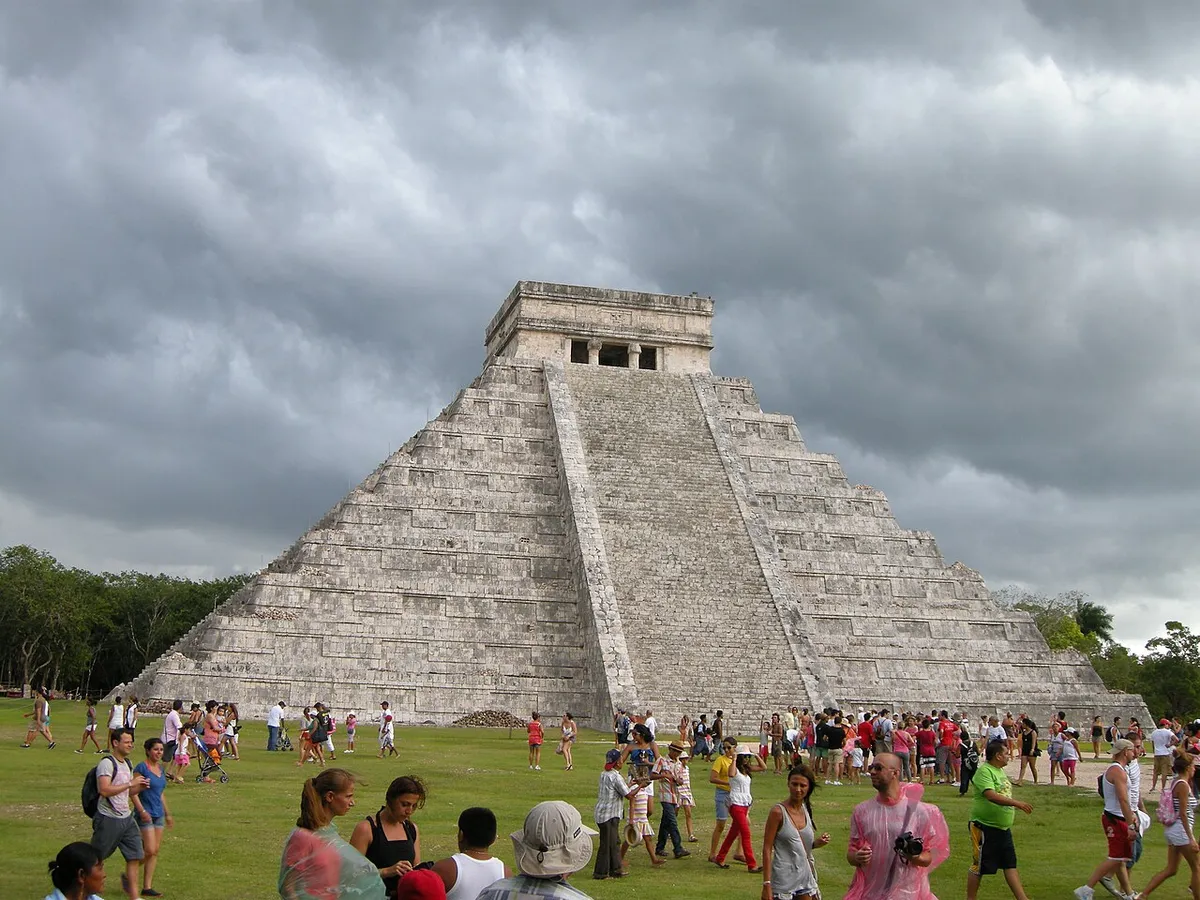
El Castillo in the first hour of the day - the light is warm and the plaza is still walkable. Photo: Wikimedia Commons (CC BY-SA 2.0).
Quick answer The hour, the day and the month - ranked by how much each changes your visit
Hour beats day beats month. Enter at 8:00 (the tour-bus wave lands 10:30-13:00); pick Tuesday-Thursday (Sundays are free for Mexican citizens and residents and carry the week's biggest crowds); come November-April for dry air and manageable heat, or accept afternoon downpours in the green season. The exception worth having: the equinox serpent shadow on 20-22 March and 21-22 September - extraordinary, and the most crowded hours of the Chichén Itzá year. A skip-the-line ticket protects the early hour; at 8:00 even the gate queue is short.
Key takeaways
- Best hour: 8:00-10:00 - empty plaza, soft light, shortest lines.
- Best day: midweek. Avoid Sunday - why.
- Best months: November-April; the month chart shows heat and rain by month.
The Hour Decides Most of It
Chichén Itzá opens at 8:00 and closes at 17:00, last entry 16:00. The visitor curve is brutally predictable: the first hour belongs to independent travellers and the tour groups that slept nearby (Valladolid, Pisté); from about 10:30 the day-tour wave from the Riviera Maya lands and the central plaza thickens until it is shoulder-to-shoulder by noon; after 15:00 it thins again, with the hard afternoon sun as the trade.
| Hour | Crowds | Light and heat | Verdict |
|---|---|---|---|
| 8:00-9:00 | Light | Golden side-light, cool | The window everything else protects |
| 9:00-10:30 | Building | Bright but manageable | Good - the plan B |
| 10:30-13:00 | Peak | Harsh overhead sun, 30°C+ | Avoid; this is the tour-bus wave |
| 13:00-15:00 | Thinning | Hottest, little shade | Worst combination; vendors thickest |
| 15:00-16:00 | Quieter | Warm side-light returns | Fine for a second loop; last entry 16:00 |
How a ticket protects the hour
The gate booth queue is longest exactly in the window you are trying to beat - by 8:30 in high season it can run 30-60 minutes. A skip-the-line ticket moves you past it to the express lane; bought the night before (Tiqets delivers the QR code by WhatsApp or email the day before), it is the cheapest hour-protection available. Arriving at 8:00 without one is also fine in the green season - the advance verdict splits the difference by month.
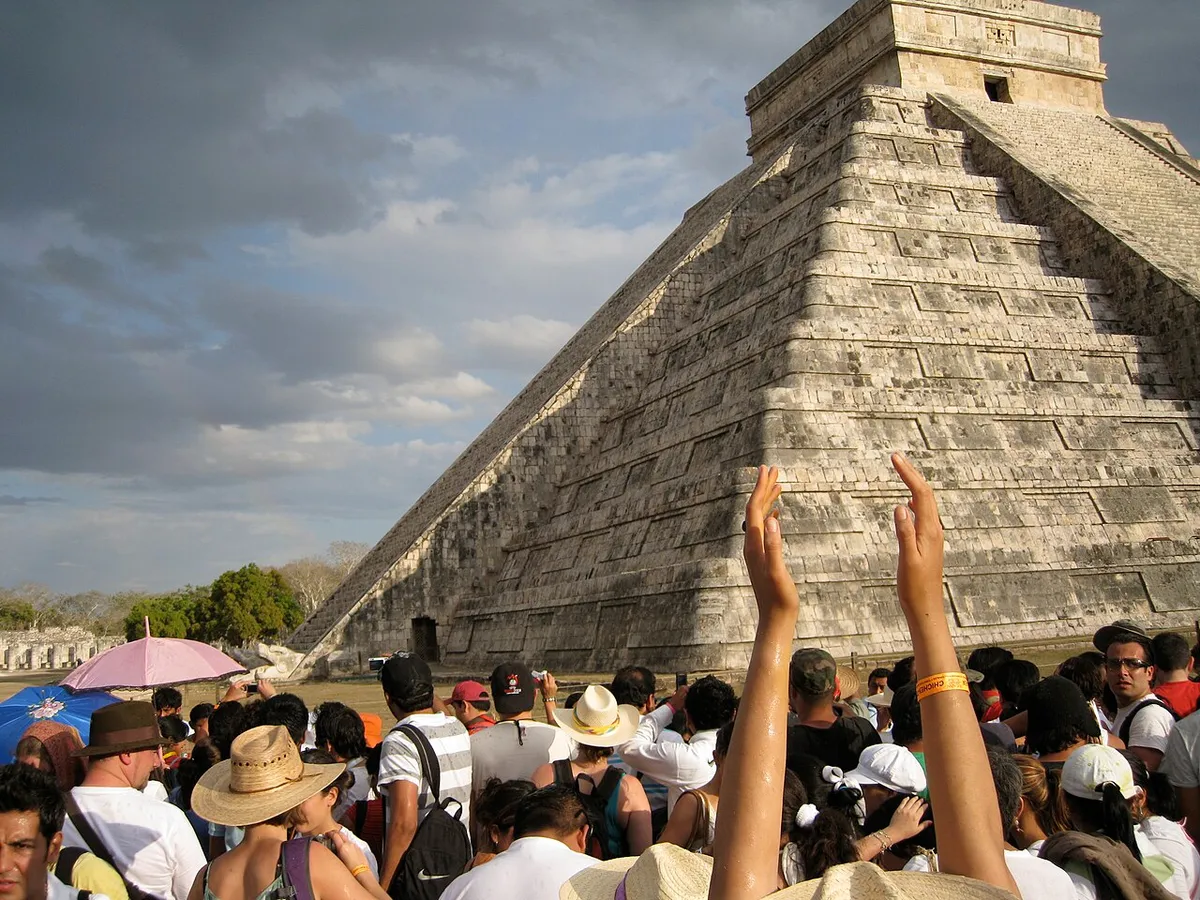
The serpent head that gives equinox its magic: on three afternoons each March and September, light builds a body down the staircase. Photo: Wikimedia Commons (public domain).
The Equinox Exception
On the afternoons of 20-22 March and 21-22 September, the sun's angle makes triangles of light and shadow crawl down El Castillo's north stair, ending at the serpent head - the site's signature event. It is genuinely worth seeing once. It is also the most crowded the site ever gets: capacity crowds arrive from dawn, the plaza is fenced for the event, and a normal 2-3 hour visit becomes a full-day expedition with long stretches of standing.
If the equinox is your why, buy tickets ahead, arrive at opening, and treat the shadow (late afternoon) as the finale, not the plan.
Chichen Itza Month by Month
Typical daytime highs at the site; Yucatán's heat barely dips below 28°C any month. What really changes is rain and visitor volume - the tones mark the crowd season, not comfort.
The Months, Translated Into a Decision
November-April is the dry season: reliable mornings, dust rather than mud, the highest visitor volumes (Christmas-New Year and Easter weeks are the peaks). May-June is the hottest stretch - 35°C days make the 8:00 hour non-negotiable. June-October is the green season: cheaper rooms, thinner crowds, and afternoon rain that usually arrives as a short, dramatic downpour rather than a washed-out day - a 7:00 start finishes the visit before it. September carries both the green-season lull and the equinox spike, an odd combination worth planning around deliberately.
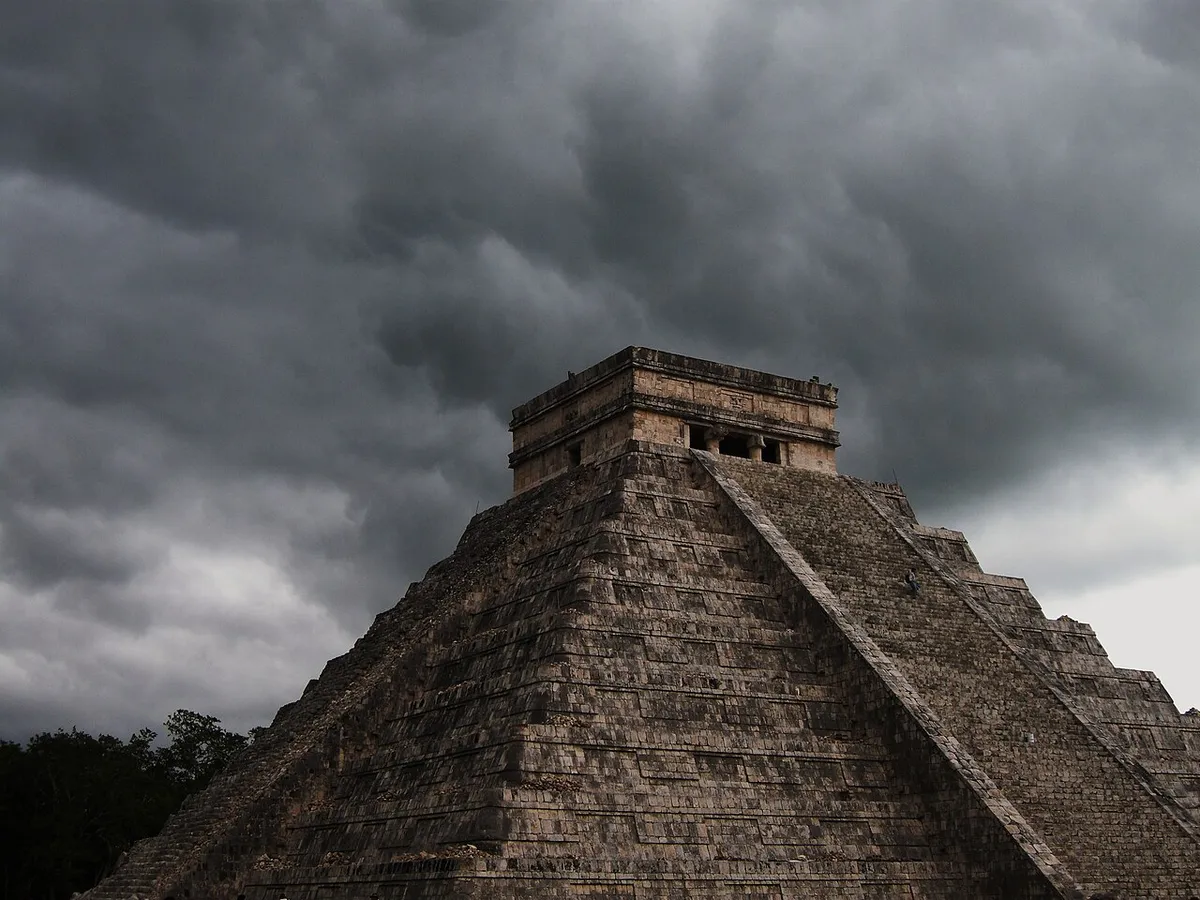
A green-season storm building over the plaza - usually an afternoon event, gone within the hour. Photo: Wikimedia Commons (CC BY-SA 2.0).
The Day of the Week, and the Sunday Rule
Chichén Itzá's busiest day is not a tour-bus day - it is Sunday, when entry is free for Mexican citizens and residents, and Yucatecan families arrive in numbers that dwarf the international crowds. It is a wonderful, festive, completely packed day. Tuesday-Thursday are the calmest; Friday-Saturday fill with domestic weekend tourism. If Sunday is your only window, enter at 8:00 with an advance ticket and keep to the outlier groups after 11:00.
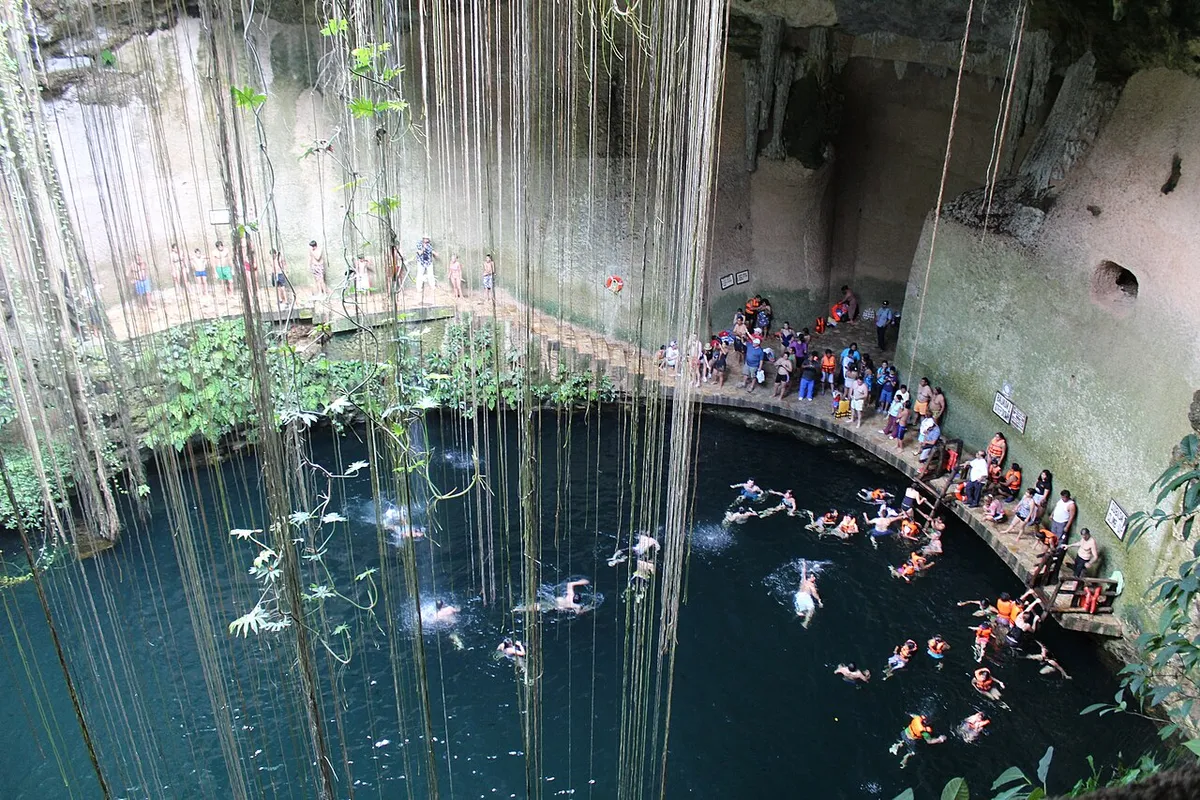
Cenote Ik Kil at midday - the right place to be while the plaza above is at its most crowded. Photo: Wikimedia Commons (CC BY 2.0).
How to Dress and What to Carry
The site is a gravel lawn with almost no shade on the central axis: sun hat, light long sleeves if you burn, and closed shoes you can walk gravel in for 2-3 hours. Carry sealed water (allowed past the gate; food is not), sunscreen applied before the gate, and small pesos for vendors and thecenote afterwards. Umbrellas beat rain jackets in the green season - they pack away and then shade you, which is their real job most days.
Inside the High Season: Which Weeks, Which Days
November-April is one word for two different crowds. The calm weeks are early November, the first half of December and late April - shoulder-season light with dry-season weather. The walls are Christmas through New Year, Semana Santa (Easter week) and, in a different key, the equinox weeks of 20-22 March - when Mexican and international travel stack, Pisté's hotels fill, and the 8:00 entry stops being advice and becomes the visit.
If your dates fall in a wall week, two adjustments do the work of a miracle: enter at opening with an advance ticket, and walk the outlier groups (Caracol, Osario) first, reversing into the plaza once the first wave has photographed El Castillo and moved toward the cenote.
The mid-season sweet spot
The single best fortnight most years: the last two weeks of November - dry season locked in, holiday waves still ahead, morning temperatures near 24°C. Early December after the 6th runs it close. Booking the ticket that far out costs nothing given the 24-hour free-cancellation window; the date can move with the forecast.
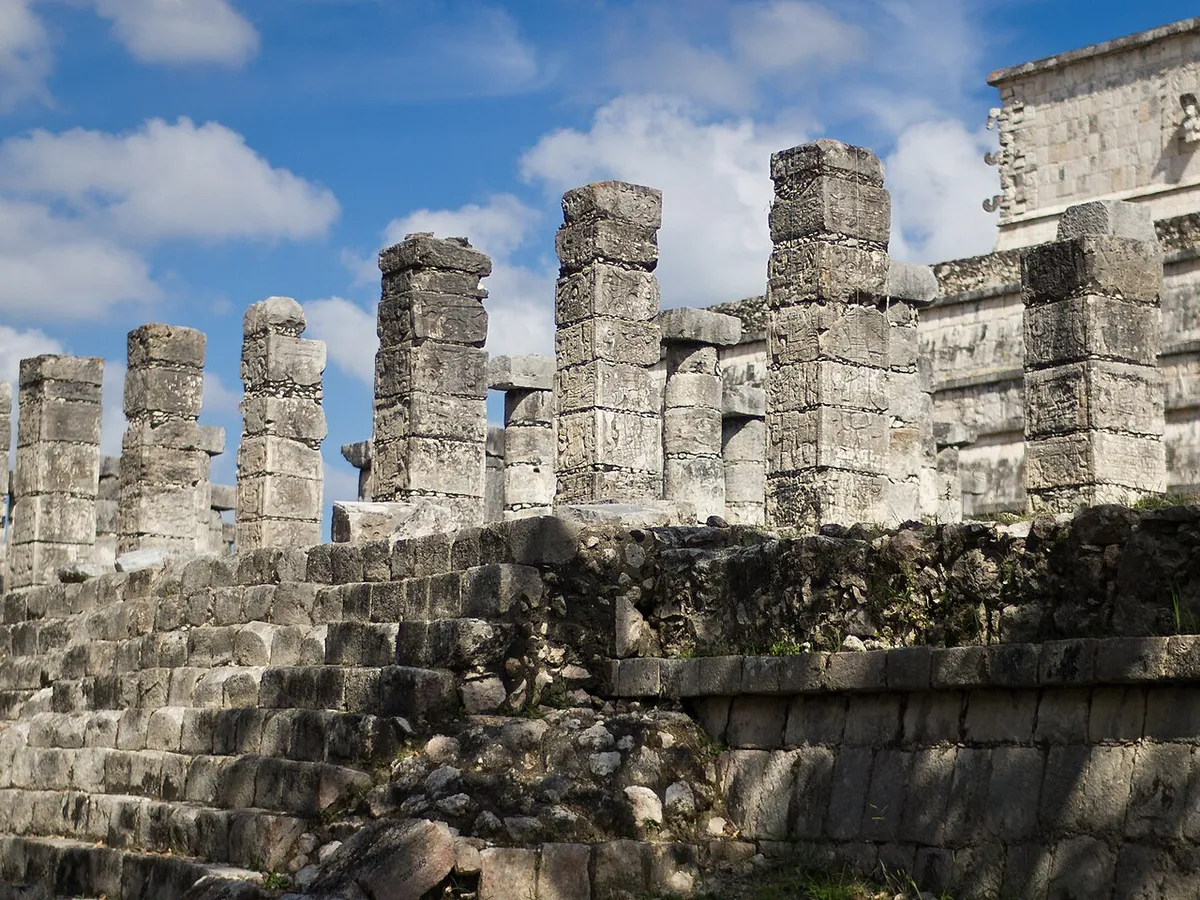
Dry-season morning in the Thousand Columns group - the light that makes November worth choosing. Photo: Wikimedia Commons (public domain).
The Green Season's Rain-Day Playbook
June-October rain is mostly an afternoon phenomenon: a build-up from late morning, a violent hour, then a rinsed and steaming afternoon. The playbook: front-load the visit - 8:00 entry, core loop done by 11:00; carry the umbrella that shades you until it shelters you; and keep the swim for the rain's aftermath, when the cenotes are at their most atmospheric and the site's paths drain fast on limestone. Full-day washouts happen a handful of times a season; the 24-hour free-cancellation window on both $79 tickets exists precisely for them.
What rain improves
Photographers rank the wet weeks above the dry for one reason: cloud-drama skies over El Castillo and greener jungle backdrops. The trade is humidity that makes the 10:30-15:00 hours heavy, and the honest advice is the same as the dry season's, only more so - visit early, leave late morning, swim in the afternoon.
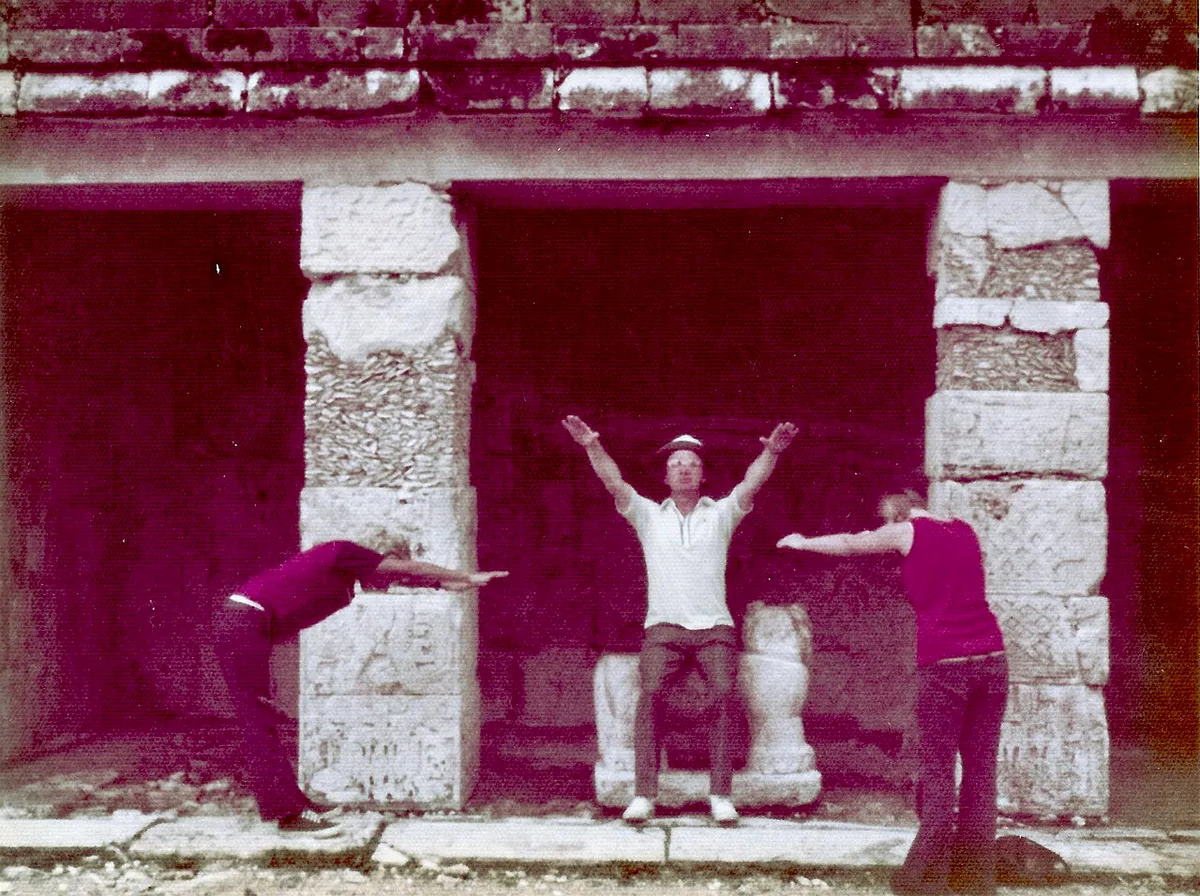
Inside El Castillo's chamber in an archival photograph - what the crowds once climbed to; the equinox now plays to the outside wall. Photo: Wikimedia Commons (CC BY-SA 4.0).
Timing the Ticket Purchase Itself
The calendar argues about more than the visit hour - it sets when to buy. High-season dates: buy as soon as the trip firms up; the 24-hour free-cancellation window makes an early GYG or Tiqets booking a free option, and pay-later on GYG holds a date without charging a card. Green-season dates: the purchase can wait until the evening before - the gate queue you are insuring against barely exists, and the Tiqets delivery arrives the night before either way. Equinox dates: buy early and treat the afternoon shadow as theatre, entering at 8:00 regardless. In every case the purchase decision is a calendar decision first and a price decision second - the price itself does not move by season.
Heat, Humidity and the Body's Vote
Weather guides print averages; bodies experience the plaza. Yucatán's humidity turns 30°C into a heavier 30°C than most visitors expect, and the central axis has almost no shade between the Ball Court and the Temple of the Warriors. The practical translation: November-February is walking weather by any standard; March-April is hot but dry enough that sweat works; May is the furnace month where the 8:00 entry is survival, not preference; June-October trades a few degrees of heat for humidity and the afternoon storm cycle.
Water is not a suggestion at any of it - carry two litres per person, more in May, and remember the gate seals nothing: an ice cooler is fine, food is not.
The one-look forecast check
The single most useful number before the trip: the overnight low. Below 22°C means a comfortable morning walk; above it, expect the first hour to already feel tropical. The overnight low is also the honest difference between the 'cool' and 'hot' halves of the year - the daytime highs barely move, as the month chart shows.
Special Dates: Equinox, Shows and the Cadenza of Holidays
Three calendar events reshape a visit. The spring and autumn equinox afternoons (20-22 March, 21-22 September) draw the year's largest crowds for the serpent-shadow effect on El Castillo's north stair - plan a full day, enter at opening, and treat the shadow as the finale. Kukulkán Nights evenings (the light show) close the site to day visitors on some dates and reopen it for the show - check the show calendar when your trip is near a show night, since the evening ticket is separate from everything daytime. And Mexican holiday weekends (Semana Santa above all) push Sunday-style crowds onto adjacent days.
None of these close the site; all of them reward the traveller who looked at a calendar before booking flights.
Timing for Groups, Kids and Photographers
Three traveller types bend the calendar differently. Groups of 6+ should treat high-season weekends as unauditioned chaos - book the 8:00 window months out, and remember the site caps bookings at 99 per order on the platforms but the practical group friction is at the security check, which runs one speed. Families with young children want the same early hour for a different reason: the plaza empties again after 15:00, but by then the day's heat has already beaten most under-tens - go at opening, be done by lunch. Photographers get two gifts per day: the 8:00-9:30 north-face light on El Castillo, and the 15:00-16:00 warm return across the Osario - with the equinox afternoons as a once-a-year event worth their own trip (the exception).
Timing Questions
What is the best month to visit Chichen Itza?
November-April for dry, manageable conditions, with the caveat that December-April is also the busiest season - the early entry matters more. May is the hottest month (around 35°C). The month chart lays out heat and crowd tone together.
What time should I arrive at Chichen Itza?
At or just before the 8:00 opening. The tour-bus wave lands 10:30-13:00 and the plaza thickens with it; the first two hours are the visit's best light and its shortest lines. A skip-the-line ticket protects the window in high season.
How to dress for Chichen Itza?
Gravel paths and open sun: hat, closed shoes, light layers, sunscreen. Sealed water passes the gate; food does not. The full list is short on purpose - there is no dress code beyond comfort, unlike active churches nearby.
Is the Chichen Itza equinox worth the crowds?
Once, yes: the serpent shadow on 20-22 March and 21-22 September is a genuine spectacle. Go knowing it is the year's peak attendance, fence off your time for the late-afternoon effect, and treat everything before it as a normal early visit (the details are above).
How much time do you need to see Chichen Itza?
2-3 hours for the core buildings, half a day with the outlier groups and a cenote swim after. Entered at 8:00 you are back at the car before the worst heat and the thickest crowds - the hour table shows the full day's shape.
What weeks are busiest at Chichen Itza?
Christmas-New Year, Semana Santa, and the equinox weeks of 20-22 March and 21-22 September - plus every Sunday, which is free-entry day for Mexican citizens and residents. The calm fortnight most years is late November.
Does it rain all day in the green season at Chichen Itza?
Rarely - the pattern is an afternoon build-up and a short violent downpour, which is why the rain-day playbook front-loads the visit: 8:00 entry, core loop by 11:00, cenote swim in the fresh afternoon.
When should I buy my Chichen Itza ticket relative to the season?
High season: as early as you like, since free cancellation to 24 hours makes it a free option. Green season: the evening before is fine. Equinox weeks: early, with an 8:00 entry planned regardless - the timing logic follows the calendar, because the price itself does not move by season.
Is Chichen Itza too hot in summer?
Hot, not impossible - May is the furnace (around 35°C and dry), while June-October trades a few degrees for humidity and afternoon storms. The 8:00 entry makes any month workable; the body's-eye view of the months explains why the overnight low is the number to check.
What time of day is best for photos at Chichen Itza?
The first two hours after the 8:00 opening: side-light on El Castillo's north face, soft shadows, and no crowds in the frame. The 15:00-16:00 light flatters the outliers if you stay late. The rain-day playbook adds why green-season cloud can be a gift rather than a problem.
When is Chichen Itza quietest for large groups and families?
The same answer with different reasons: 8:00-10:00 on a Tuesday-Thursday in the shoulder weeks. Groups avoid the security-check queue that peaks mid-morning, and families finish before the heat beats the children - the group-timing notes split the advice by traveller type.
Is December or January better for Chichen Itza?
January, narrowly: same dry-season weather with the holiday wave gone, though both are peak-crowd months where the 8:00 entry carries the visit. Late November beats both - the high-season week map explains which weeks inside the season are calm.
What are the site's hours on Sundays and holidays?
Identical - 8:00-17:00, last entry 16:00, every day of the year. What changes is the crowd: Sunday's free entry for Mexican citizens and residents fills the site, and holiday weekends inherit that volume. The day-of-week section ranks the week.